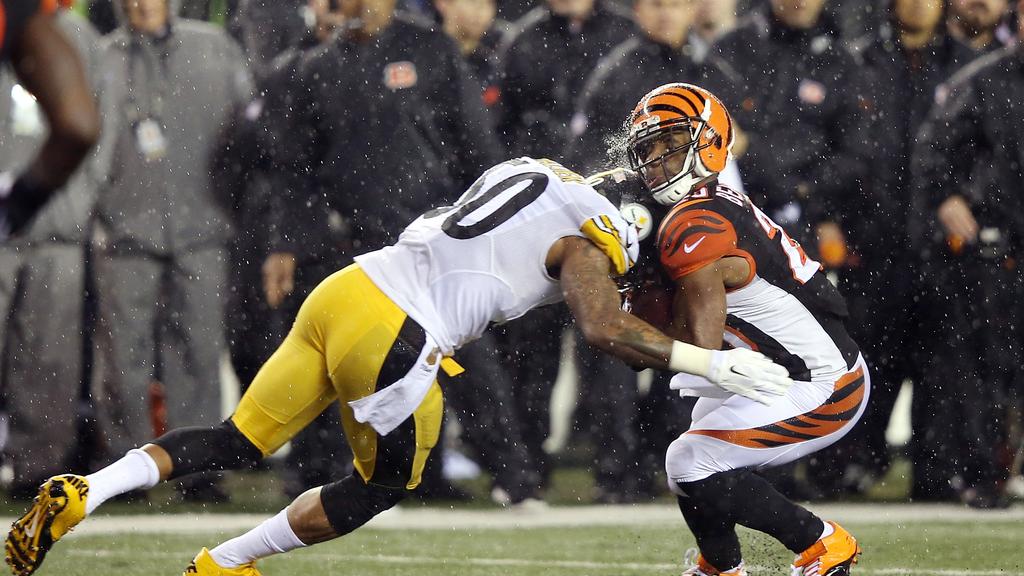
Former Pittsburgh Steelers’ linebacker Ryan Shazier, left, was flagged for leading with his helmet on this hit to former Cincinnati Bengals’ running back Giovani Bernard. Shazier’s hit left Bernard concussed. Paul Spinelli / AP Photo
Imagine driving a car and crashing it into a brick wall at 30 mph, hitting your head. Now imagine doing that over 60 times in a three-hour span.
This is what happens to an NFL player during every game. From high school through the NFL, the player could have taken thousands of blows to the head throughout his entire playing career. Is there a way to prevent this?
Chronic Traumatic Encephalopathy — or more commonly known as CTE — is a degenerative brain disease caused by multiple concussions. It causes a myriad of symptoms, including memory loss, confusion, depression, aggression and dementia. Although Dr. Bennet Omalu discovered it in 2002, it wasn’t until the mid 2010’s before it started becoming a very serious issue in the NFL. Over the last few years, this disease has been showing up more and more in former football players.
A New York Times study from 2017 found of 111 deceased NFL players, 110 of them had CTE. Not only is this a crazy statistic, it shows there are ramifications to playing America’s most popular sport.
The most well known case of CTE is of former New England Patriots tight end Aaron Hernandez. He shot and killed a man in 2013 while still playing for the Patriots. After he was sentenced to life in prison, two years later at 27 years old, he hung himself. His brain was examined to see if he suffered from the disease and it showed he “suffered from the most sever CTE ever found in a person his age.” This just goes to prove that this brain disease probably started when he was at a very young age.
Former Kansas City Chiefs star running back Larry Johnson, who once rushed for 3,539 yards in two seasons is one former NFL players who suffers from the disease and is still alive to tell his story. He can feel what he calls the “demons” approaching so he walks away from whatever he’s doing to gather his thoughts. He becomes outrageously angry at almost nothing and has to remind himself not to act on those demons.
Most helmets during that time were all but the same. Now, 15 years after Johnson’s record record-breaking carry season, things are very different.
Helmets today are becoming more and more safe. The Vicis Zero1 has now tested the best for three years in a row by the NFL and NFLPA’s lab testing. This helmet took the league by storm in 2017 because it did something no other helmet had done before — the shell of the helmet is soft, not hard like other helmets. This allows the shell to give in which has a lot less force traveling to the head.
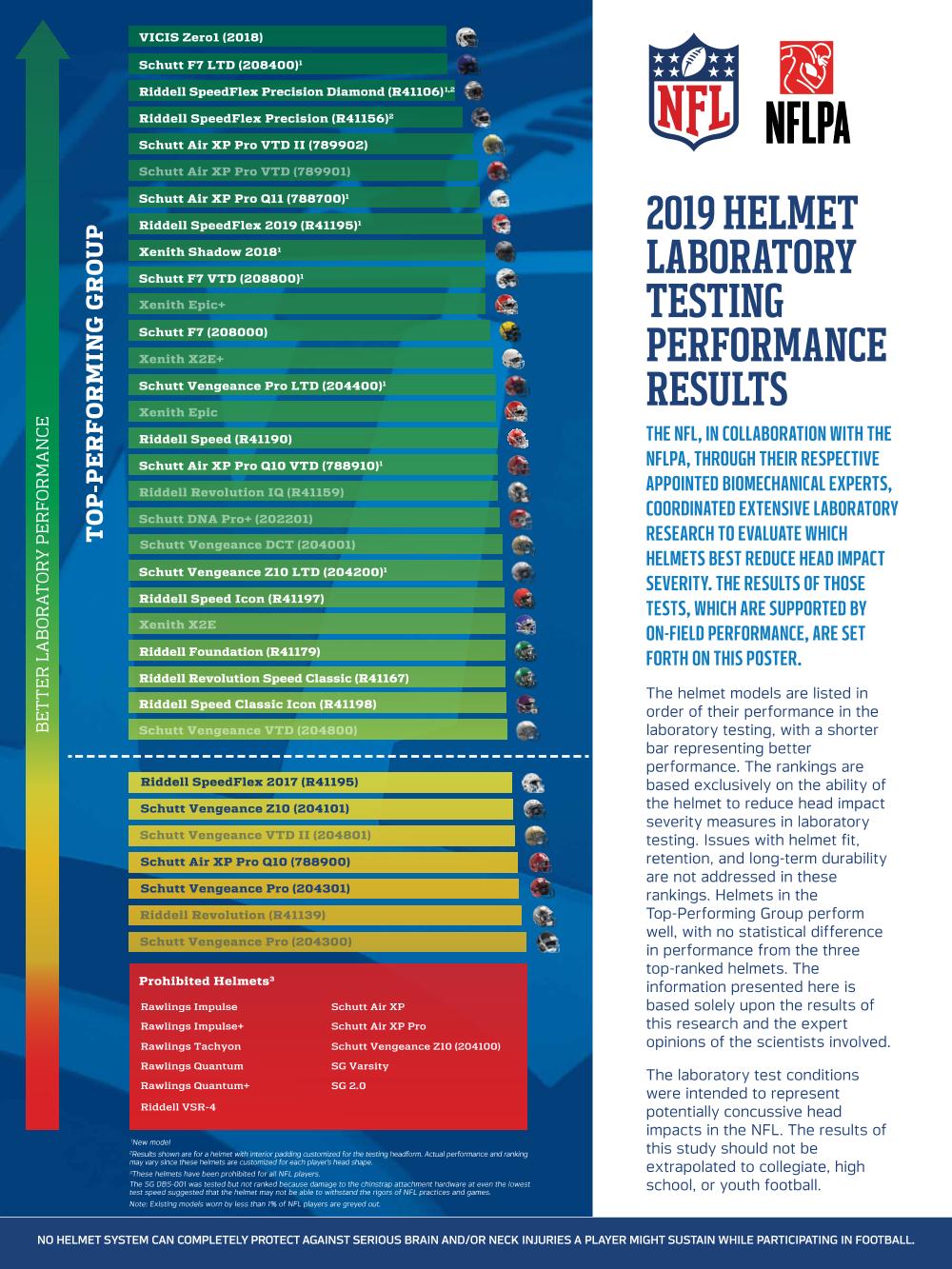
Source: playsmartplaysafe.com
“The focus on head injuries has really impacted the recognition of concussions and concussion symptoms in a good way,” said Todd Toriscelli, director of sports medicine and performance for the Tennessee Titans. “We now have the NFL testing helmets and using statistics to determine what is safe to use and what isn’t.”
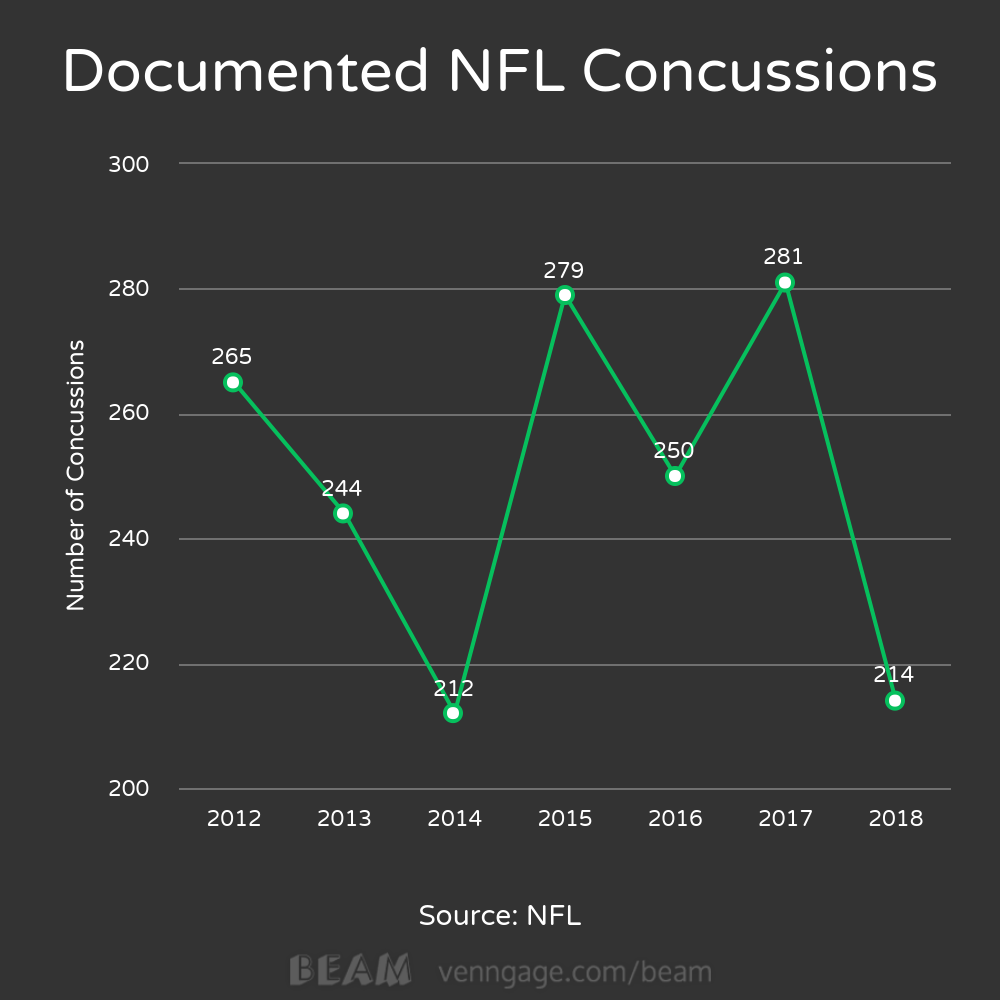
Graph created by Nick Williams
These numbers may gain more attention in the NFL, but they’re also prevalent in the college ranks too. Former Ball State football offensive lineman Eric Kuznar quit playing after his freshman year for multiple reasons, one of them being the risk of head injuries.
“As an offensive lineman, you’re in the trenches battling it out, banging heads on every play and in practice too,” Kuznar said. “I had to think about my future and if I wanted my head and body to work properly after college. Giving it up was the right thing to do.”
One of the easiest ways to prevent head injuries is by proper coaching and tackling techniques. Kids need these types of coaches to teach them while they’re young. The older they get, the higher risk players have of injuring themselves or their opponent.
“It’s important for coaches to become USA Football certified,” said Andy Ryland, director of education and training at USA Football. “Not only do they teach players of all ages how to properly tackle, they also help prevent all sorts of injuries to them and the person they’re hitting.”
Despite 46 percent of American parents saying they would encourage their kids to play another sport because the risk of head injuries, one youth football parent says she loves her son playing football.
“Josh’s football games really bring the family together,” said Rhonda Sims, mother of 8-year-old Josh Sims. “I trust the coaches to teach my son how to make good tackles and not use his head when blocking or hitting someone.”
By the end of the 2018 NFL season, 74 percent of players used the more safe and advanced helmets. This was an increase of 33 percent from last year according to the Washington Post. This number is just going to go up because more helmets will be banned by the start of the league year and that’s a good thing.
Overall, while head injuries probably won’t ever completely go away, the right steps are being made to make the game safer. New helmet technology will keep being developed to help prevent these injuries, the NFL will keep tweaking rules for player safety and coaches should become better and better at teaching proper techniques.
This is only the beginning of CTE in former football players. Only time will tell if enough was done to help current and future players from developing it down the road.
 News 418 Concussions